Federal Programs
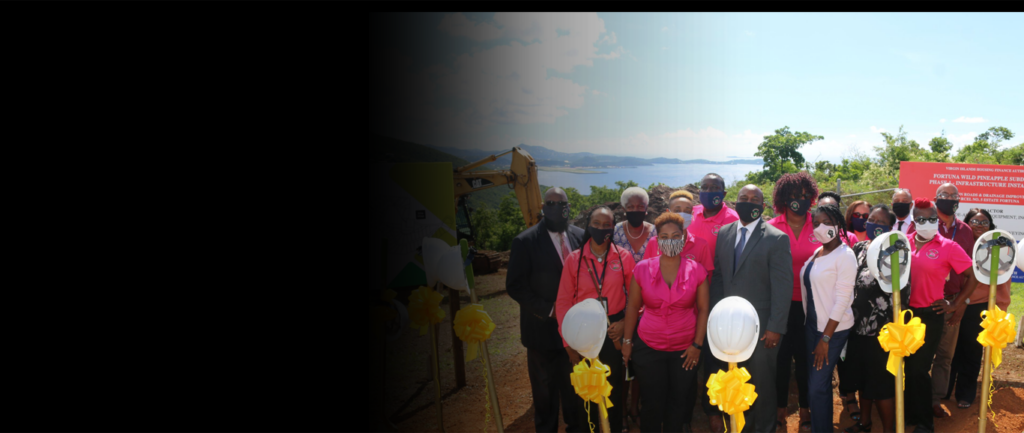
Rebuild USVI Industry Day 2025
The Federal Programs Division has oversight responsibilities for virtually all of the VIHFA’s programs/activities which are federally-funded or which are administered by any federal entity. The major program areas under the jurisdiction of the Federal Programs Division included the HOME Program, the Community Development Block Grant (CDBG) and Program to Emergency Solution Grant (ESG). ?
Community Development Block Grant- CV (CDBG-CV) and Emergency Solutions Grant -CV (ESG-CV) and the American Rescue Plan program – HOME-ARP that are currently administered under the Federal Programs Division.
Community Development Block Grant Program
The Community Development Block Grant (CDBG) Program was established by the Housing and Community Development Act of 1974, as amended. The Act consolidated previously existing
categorical grant programs into a single block grant which is awarded to eligible localities throughout the states and also the insular areas, based on a formula allocation.
CDBG is under the jurisdiction of the Department of Housing and Urban Development (HUD). The VIHFA administers the program locally. CDBG has as its primary objective the development of viable urban communities through the provision of decent housing, suitable living environment, and expanded economic opportunities.

CDBG funds are sub-awarded to non-profit and governmental entities to carry out various programs and projects that primarily benefit
low-to-moderate income persons. Each funded project must meet at least one National Objective as follows: (I) prevention or elimination of slums and blight; (II) address an urgent need; and (III) primary benefit to persons of low and moderate income. Benefit to low/mod income persons is where either (1) at least 51% of the area residents are low-income as established by the census map or, (2) the activity benefits a population which is generally presumed by HUD to be low-income, or (3) housing is created that will be restricted to occupancy by households meeting the federal low-income definition, or (4) jobs are created/retained and at least 51% of the jobs will be held by or available to low/mod income residents.
The Territory typically receives an allocation of approximately $1.9M annually. VIHFA is allowed to use up to 20% of the annual allocation program administration expenses. No more than 15% of the grant allocation can be dedicated to public service projects such as after-school programs; the remaining funds must be used for “brick and mortar” projects.
A solicitation for proposals is conducted once a year. Applications are generally made available for distribution at VIHFA’s offices on St. Thomas and St. Croix in early January. Notices are published in the local newspapers and electronic media announcing the availability of applications as well as the date(s) of any planned orientation sessions. Applications must be submitted by the published due date in order to be considered for funding.
A solicitation for proposals is conducted once a year. Applications are generally made available for distribution at VIHFA’s offices on St. Thomas and St. Croix in early January. Notices are published in the local newspapers and electronic media announcing the availability of applications as well as the date(s) of any planned orientation sessions. Applications must be submitted by the published due date in order to be considered for funding.
A solicitation for proposals is conducted once a year. Applications are generally made available for distribution at VIHFA’s offices on St. Thomas and St. Croix in early January. Notices are published in the local newspapers and electronic media announcing the availability of applications as well as the date(s) of any planned orientation sessions. Applications must be submitted by the published due date in order to be considered for funding.
A solicitation for proposals is conducted once a year. Applications are generally made available for distribution at VIHFA’s offices on St. Thomas and St. Croix in early January. Notices are published in the local newspapers and electronic media announcing the availability of applications as well as the date(s) of any planned orientation sessions. Applications must be submitted by the published due date in order to be considered for funding.

Emergency Solutions Grant
The Emergency Solutions Grant (ESG) was created under the Homeless Emergency Assistance
and Rapid Transition to Housing Act of 2009 (HEARTH Act). The program replaced the former
Emergency Shelter Grant. The ESG funds are awarded to eligible localities throughout the states and also the insular areas, based on a formula allocation. The ESG is under the jurisdiction of the Department of Housing and Urban Development (HUD). The VIHFA administers the program locally.
The focus of the ESG is providing assistance to assist persons who are literally homeless or at risk.
The Territory expects to receive an allocation of approximately $150,000 annually. VIHFA is allowed to use up to 7.5% of the annual allocation
program administration expenses. In accordance with federal regulations, no more than 60% of the annual grant allocation can be sub-awarded for emergency shelter and street outreach activities.
Continuum of Care (CoC)
Each year, the U.S. Department of Housing and Urban Development (HUD) issues funding
opportunities under the Continuum of Care Grant Program. The Continuum of Care Grant Program is designed to promote a community-wide commitment to the goal of ending homelessness; to provide funding for efforts by non-profit providers, state, and local governments to quickly re-house homeless individuals, families, persons fleeing domestic violence, and youth while minimizing the trauma and dislocation caused by homelessness; to promote access to and effect utilization of mainstream programs by homeless individuals and families; and to optimize self-sufficiency among those experiencing homelessness. The local Continuum of Care (VI-CoC) is required by HUD to submit a consolidated application for funding for renewal and/or new homeless services projects seeking funding under the CoC Grant.


HOME-American Rescue Plan (ARP) Supportive Services & TBRA Program
The Virgin Islands Housing Finance Authority (“VIHFA”) is soliciting applications from qualified organizations to deliver eligible supportive services and/or tenant based rental assistance under the HOME-American Rescue Plan Program (“HOME-ARP”) to qualified individuals and families who are experiencing homelessness, at-risk of homelessness, or at the greatest risk of housing instability. The HOME-American Rescue Plan (HOME-ARP) program was established through a $5 billion allocation to states and local Participating Jurisdictions (PJs) in the American Rescue Plan Act of 2021 (ARPA). The VIHFA administers the territory’s $3.3 million. Funds will be awarded to existing housing and supportive services providers or new providers to deliver improved quality care to qualifying populations where current resources are insufficient to provide such services currently or to meet current demand.